Mount Tai :Yuquan Temple Scenic Area
On the majestic northern slope of Mount Tai stands a thousand-year-old ancient temple—Yuquan Temple, about twenty kilometers from downtown Tai'an and about thirty kilometers from downtown Jinan. From Tai'an, follow Taifo Road north through Dajinkou Township, passing through Ouchi Village to reach the destination; Some left Jinan, passing through Licheng and Yaoxiang Forest Farm, reaching Ouchi Village. The scenic area covers more than 20,000 mu, with overlapping peaks, crisscrossing canyons, dense forests, and long streams. Ancient trees and beautiful trees can be seen everywhere, and exotic flowers and grasses can be found everywhere. Far from the hustle and bustle, it is a supreme place for people to return to nature and wander their spirits. The scenic area centers around Yuquan Zen Temple, which was first built during the Northern Wei period, forming a cultural landscape centered on Buddhism and folk culture. It is known as the Daiyin Buddhist Domain and is a rare ethereal treasure land.
Yuquan Temple was founded by the monk Yi of the Northern Wei dynasty. Because of the Gushan Mountain to the south, it is also called Gushan Temple, commonly known as Foye Temple. Inside the temple are four Tang-planted ginkgo trees, the Mahavira Hall, one acre of pines, footprints of the East and West Buddhas, and Northern Wei stone Buddha statues, among other attractions. There are steles such as the 'Record of Gushan Temple,' written and inscribed by Jin dynasty scholar Dang Huaiying, which meticulously records the temple's long history.
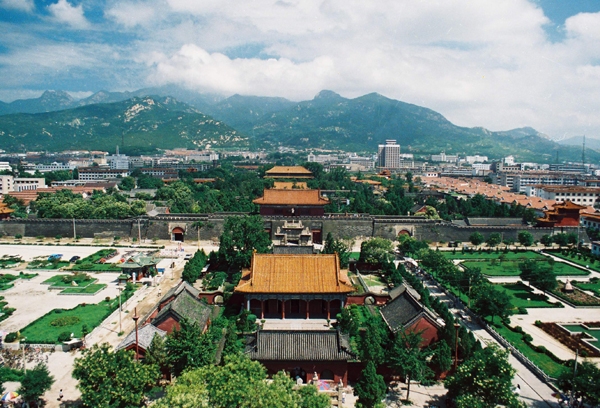
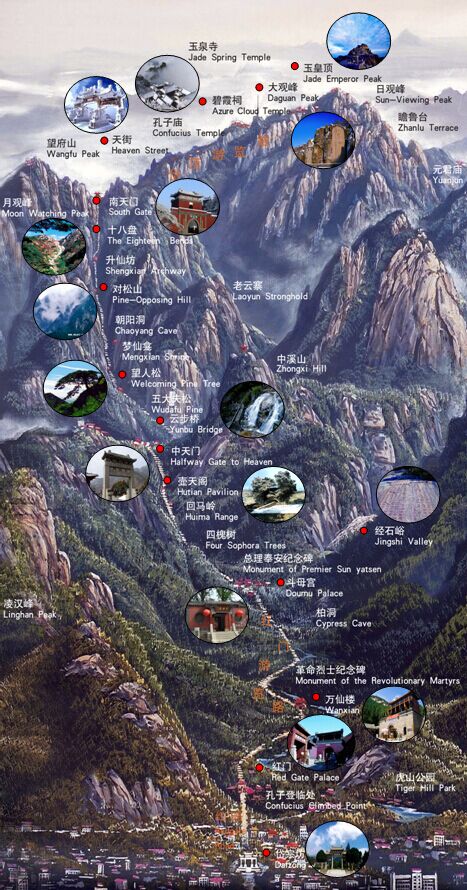
On the summit of Gushan in front of the temple stands an ancient pine tree known as the 'Dingnan Needle.' Together with the mountain gate of Yuquan Temple, the Mahavira Hall, the Zhengyang Gate and Houzai Gate of Dai Temple, the Dai Zong Archway, and the South Heavenly Gate, it forms a north-south line. On the cliff halfway northwest of Gushan, there are two caves that flow with springs year-round. The Dai History calls them the 'Golden Silk Cave,' said to be the alchemy place of Qiu Chuji, the leader of the Quanzhen Sect. Further south is the Rice Stall, which in the past used to be used by people north of Mount Tai to climb the mountain. The name comes from monks and mountain folk giving alms and selling food and drink here. To the northwest of the food stall is a deep ravine, where ice and snow remain unmelted in midsummer. The 'Taishan Gazetteer' refers to it as the Great Ice Laoyu Valley.
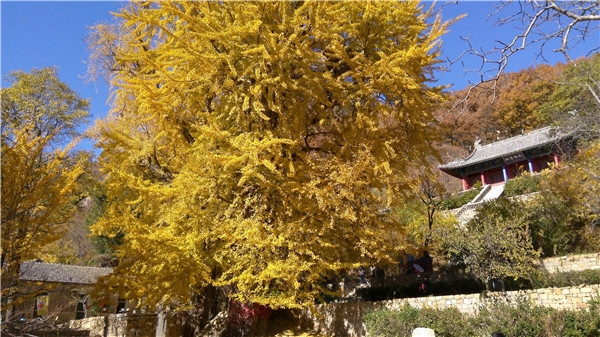
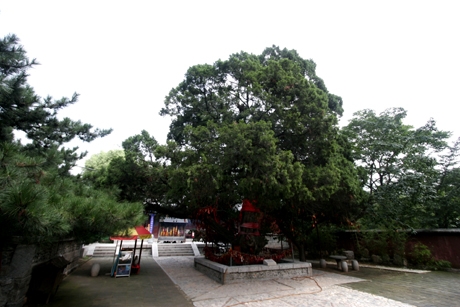
Millennium Ginkgo: Inside Yuquan Temple, there are four thousand-year-old ginkgo trees. The four ginkgo trees are tall and upright, lush and verdant. The one on the right side of the hall has a trunk circumference of over 7 meters and a height of 36 meters, making it the tallest on Mount Tai.
Mahavira Hall: Based on historical records, it was rebuilt in 1993 on the original site, enshrined by Shakyamuni Buddha, with 18 Arhats standing on the side.
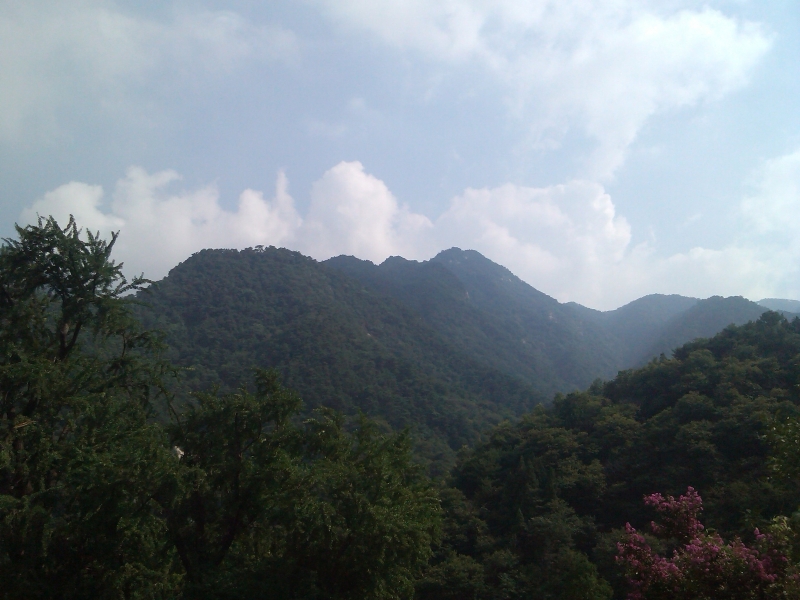
Buddha gives birth to all phenomena: Looking directly south from the Mahavira Hall, one can see verdant pines and cypresses, overlapping peaks, and lush greenery. If viewed from the side, a Buddha head appears before your eyes—its forehead, eyes, nose, and chin are all lifelike, leaving one in awe at nature's creation
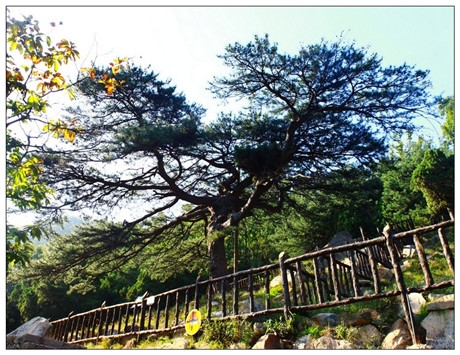
One Mu Pine: Located north of the temple, its trunk is thick and sturdy, with twisted branches that wind and spread out, forming a flat-topped giant umbrella. Among the many ancient pines on Mount Tai, it has the largest shading area, about 1.3 mu, hence the name "One Mu Pine."
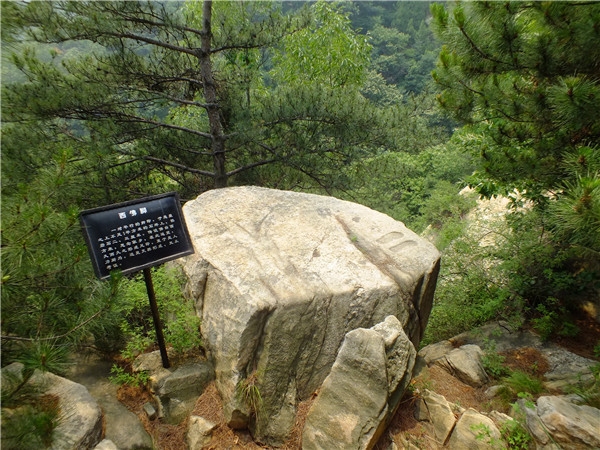
East and West Buddha Footprints: On the cliff stone terraces on the east and west sides of the main hall, footprints of Buddha deities from back then can still be found, known as the East and West Buddha Feet. The East Buddha's Foot has five or six footprints, and the rock sinks two or three centimeters deep. The West Buddha's Foot is located on a stone platform atop the cliff west of the Mahavira Hall. On the less than one-square-meter stone platform, a pair of footprints are printed, sinking one or two centimeters into the rock. Whether the Eastern and Western Buddha's Feet were created by human effort or natural development remains a mystery to this day. But as a legend, it has been passed down to this day, adding a touch of magic to Yuquan Temple.
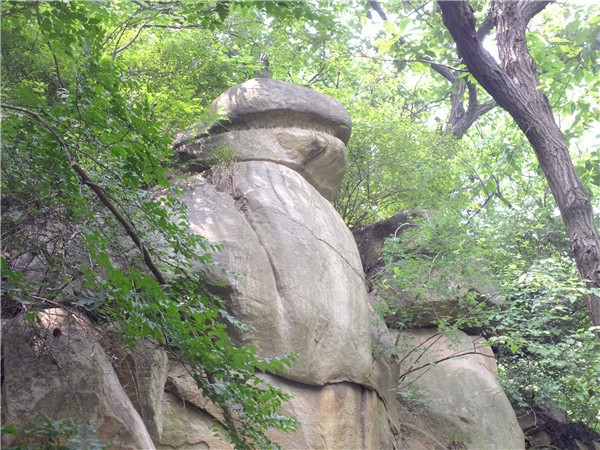
Golden Toad Worship: Located near the thousand-year-old chestnut in the small loop, with a white belly, proudly raised toad head, and a wide mouth wide open, it seems to be sincerely praying toward the main hall of Yuquan Temple.
Ruins of the Medicine Master Seven Buddhas Pavilion: On the eastern hill stands the ruins of the Medicine Master Seven Buddhas Pavilion. Historical records show it was built during the Yuan dynasty, and enshrines the Great Doctor King Buddha, Shakyamuni, Vipashi Buddha, Shiqi Buddha, Viśapa Buddha, Kuluosun Buddha, Konahan Buddha, and Kasyapa Buddha. The pavilion was destroyed during the Qing Dynasty, and its site bears the 'Memorial Stele of the Medicine Master Seven Buddhas Pavilion,' written by Yan Fu and Li Qian from the Yuan Dynasty Zhiyuan era.
Yuquan: Located on the east side of the temple, the spring water is sweet and clear, never drying up during drought. Beside the spring stands a stele inscribed by Jin Dynasty Grand Secretary Dang Huaiying reading "Yuquan," surrounded by more than ten ancient wisteria trees.
Dingnan Zhen: Located atop Gu Mountain, ancient pines form a north-south line with the mountain gate of Yuquan Temple, Dai Temple, Daizong Archway, and South Heaven Gate. At noon, it forms a north-south line with the sun and the Mahavira Hall of Yuquan Temple.
Golden Silk Cave: Located on the cliff halfway northwest of Gushan, there are two caves with springs flowing year-round. The 'History of Dai' refers to it as 'Golden Silk Cave,' said to be the alchemy place of Qiu Chuji, the master of the Quanzhen Sect.
Dabing Laoyu: South of Gushan is a deep ravine, where snow and ice do not melt in midsummer. The 'Taishan Gazetteer' refers to it as Dabing Laoyu.
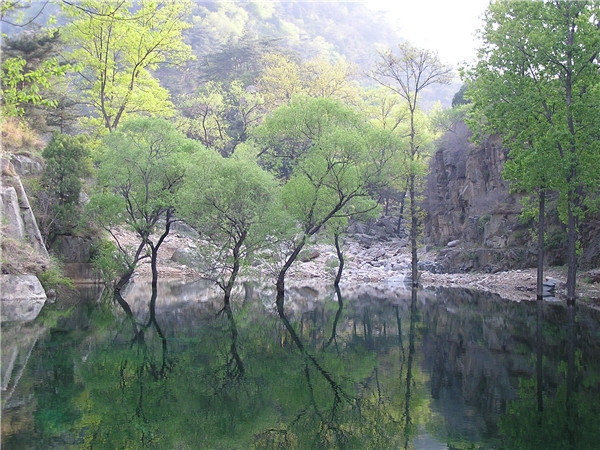
The most precious aspect of Yuquan Temple's scenery lies in its natural purity, exquisite craftsmanship, and minimal artificial embellishment, perfectly preserving its natural charm. The mountain and water scenery, famous mountains and ancient temples blend into one, making it an excellent place for leisure and recreation.
The sky is vast, the earth is vast, Buddha's light shines everywhere, green mountains, clear waters, and jade springs flow long.
Recommended Popular

Quick Navigation
Related Recommendations